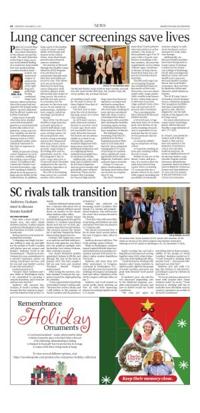

Lung cancer screenings save lives
Pope Leo’s recent diagnosis of lung cancer has raised awareness of this disease around the world. The early detection of the Pope’s lung cancer was an incidental finding of a suspicious lung nodule that was spotted during a routine medical examination. He underwent surgery to remove the lower lobe of his right lung and pathology testing confirmed Stage I pulmonary adenocarcinoma. Since the cancer had not spread to the lymph nodes, follow-up tests indicated that he did not require any further treatment.
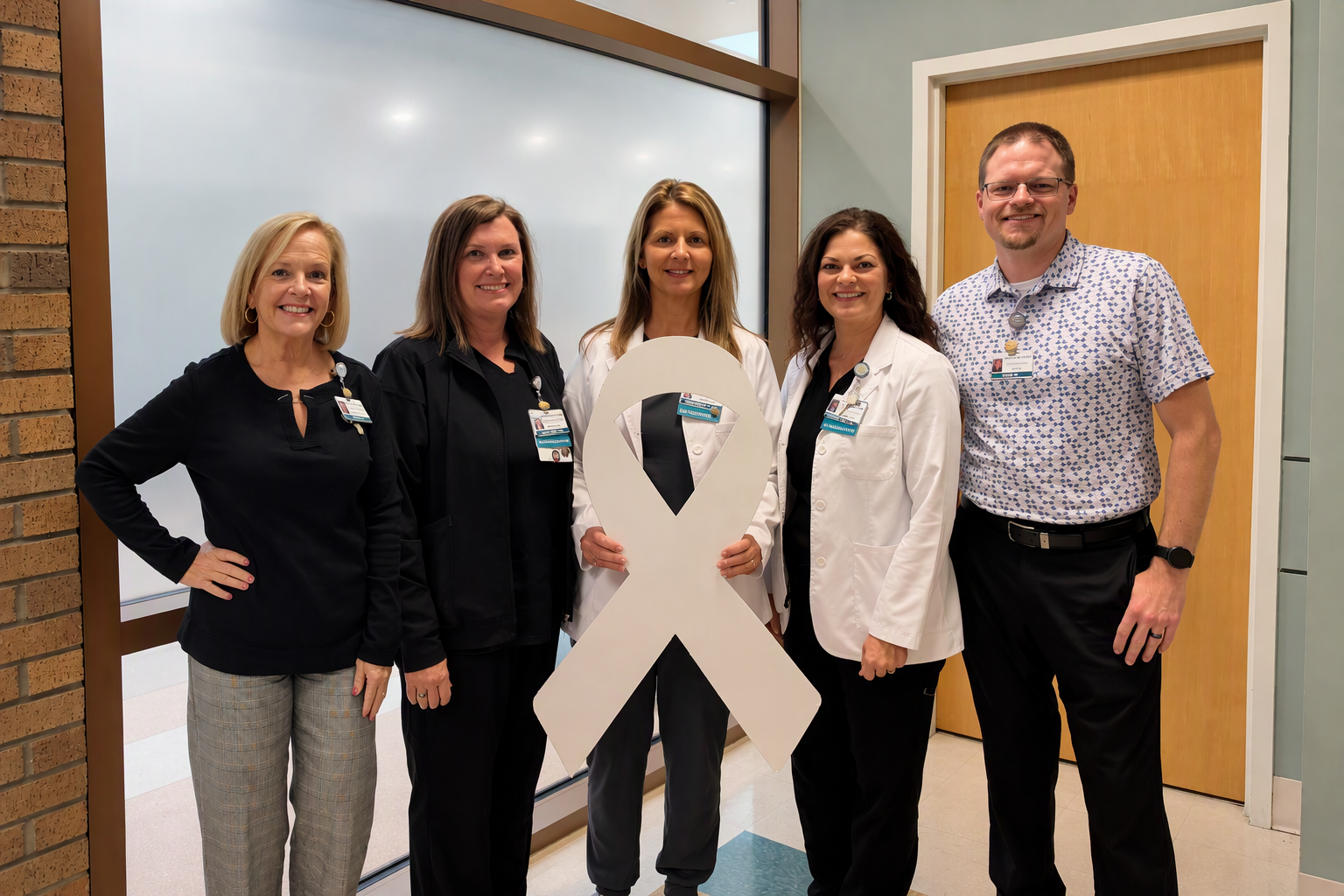
The McLeod Healthy Lungs Initiative Team includes. pictured from left. Karen Snider, Beth Epps, RN, Jennifer Floyd, RN, Christy Buffkin, RN, and Noah Kleckner.
Lung cancer in people who have never smoked can result from family genetics or environmental factors like radon or air pollution. Lung cancer in non-smokers can also be caused by inflammatory diseases such as COPD, secondhand smoke, prior radiation treatment to the chest or exposure to asbestos.
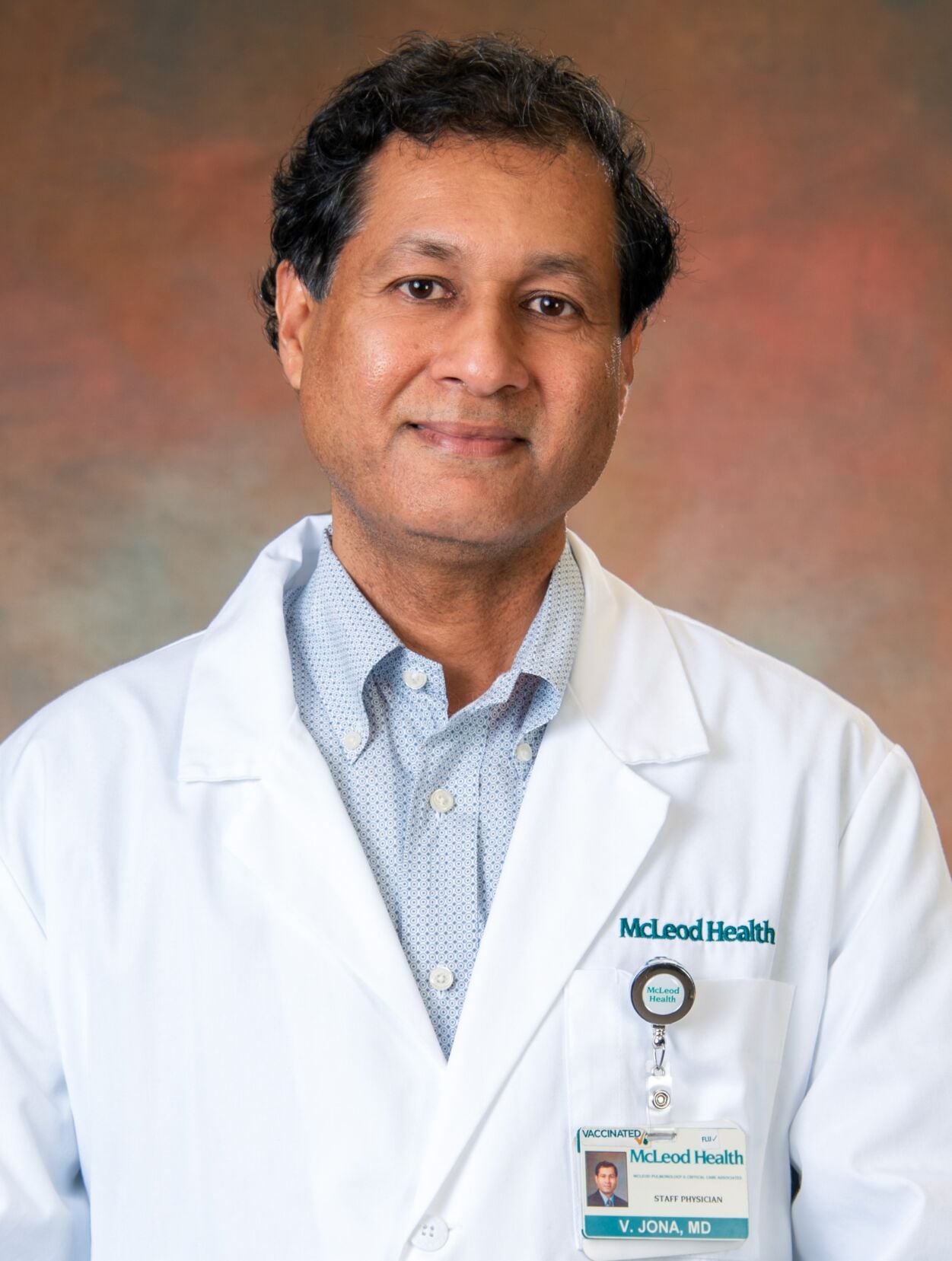
Jona
While 20 percent of lung cancer diagnoses occur in non-smokers, smoking is the leading cause of lung cancer. According to the Centers for Disease Control and Prevention, cigarette smoking is linked to about 80 to 90 percent of lung cancers deaths in the United States. In addition, lung cancer is the leading cause of cancer-related deaths in both men and women in the United States, more than breast, prostate and colorectal cancers combined.
Our mission at McLeod through the Healthy Lungs Initiative (HLI) Program is to save lives in our community through early detection and enhanced access to care. This allows us to see an increased detection in early lung cancer diagnoses with curative options while decreasing later stages of lung cancer. We want to provide not only access to screening, but for patients to also have easy access to our experts in pulmonology, cardiothoracic surgery, radiation oncology and medical oncology.

Two McLeod Health hospitals have earned national recognition from the American College of Cardiology for their commitment to providing high-qu…
Since 2019, the McLeod Healthy Lungs team has screened upwards of 14,000 individuals and detected more than 830 cases of lung cancer. Of McLeod patients who receive a lung screening and are later diagnosed with lung cancer, more than two-thirds will have an early-stage (Stage I/II) finding that may be potentially curative. The HLI program’s rate of early-stage detection is 30 percent more favorable compared to the rate for all patients regardless of screening history.
The risk of developing lung cancer for a current smoker with a history of smoking a pack a day for 40 years is about 20 times higher than that of a non-smoker.

The article discusses the risk factors and challenges related to breast cancer screening, diagnosis, and treatment.
The best way to minimize the risk of developing lung cancer is to never start smoking.
As with most cancers, early detection remains the key to survival. Until 15 years ago, there were not reasonable tests for early detection because the tumors are not always visible on a chest X-ray. Historically, a patient would be diagnosed with lung cancer once they developed symptoms such as coughing up blood, unintentional weight loss, or shortness of breath.
Additionally, early-stage lung cancer patients often do not have symptoms and can go for months and potentially years without detection. These are the reasons that screening for those at high risk for lung cancer has been recognized as an important method in saving lives.
Fortunately, for those who have been smoking for years and are considered high risk, there is now a screening tool to detect lung cancer with scientific data showing the benefits. Screening means testing an individual before they have symptoms of disease.
The National Lung Screening Trial (NLST), published in the New England Journal of Medicine in 2011 indicated that low-dose computed tomography (CT) scans of the lungs of a patient with a significant smoking history led to earlier diagnosis, treatment, and a reduced chance of death.
A lung CT scan can detect small nodules on the lungs years before they can be seen on a regular chest X-ray.
The NLST involved more than 53,000 patients who were former or active smokers. The study of these patients ages 55 to 74 years with a 30 pack-year history of smoking or former smokers, who met the requirements such as being without signs, symptoms or history of lung cancer, found that there was a 20 percent risk reduction in mortality.
The McLeod Lung Cancer Screening Program was established based on the results of this trial. Physicians can now detect small, early-stage, potentially curable lung tumors. In fact, when lung cancer is detected at an early stage, patients have a five-year survival rate of 67 percent after treatment.
The screening guidelines followed by McLeod Health include:
• 50 to 80 years of age who have had a 20 or more pack-year history of cigarette smoking (20 pack-year is equivalent to one pack per day for 20 years or two packs per day for 10 years)
• Currently exhibiting no symptoms of lung cancer
• Currently smoking or have quit smoking within the last 15 years
Similar to cancers of the breast, colon, and prostate, it is obvious that the early detection of lung cancer with a screening CT scan provides for a greater chance to be cured with surgery including the possibility of minimally invasive surgery or radiation treatment such as stereotactic body radiation therapy.
Additionally, six McLeod Health facilities have been designated as Lung Cancer Screening Centers by the American College of Radiology (ACR): McLeod Regional Medical Center, McLeod Health Loris Seacoast, McLeod Health Carolina Forest, McLeod Health Clarendon, McLeod Family Medicine Dillon and Palmetto Adult Medicine Sumter.
The ACR Lung Cancer Screening Center designation is a voluntary program that recognizes facilities that have committed to practice safe, effective diagnostic care for individuals at the highest risk for lung cancer.
For more information on Lung Cancer Screenings, please call the McLeod Healthy Lungs Initiative at 843-777-5953.
Dr. Vinod K. Jona joined the medical staff of McLeod Health in 2001 and has been instrumental in the expansion of pulmonary, critical care and sleep medicine programs. He serves as Medical Director of the McLeod Healthy Lungs Initiative Program and the Pulmonary Rehabilitation Committee. Board Certified in Internal Medicine, Pulmonary Disease and Sleep Medicine, Dr. Jona cares for patients at McLeod Pulmonary and Critical Care Associates.
Related

Many of us think we know the key causes and symptoms of lung cancer. However, there are still some misconceptions about the disease.